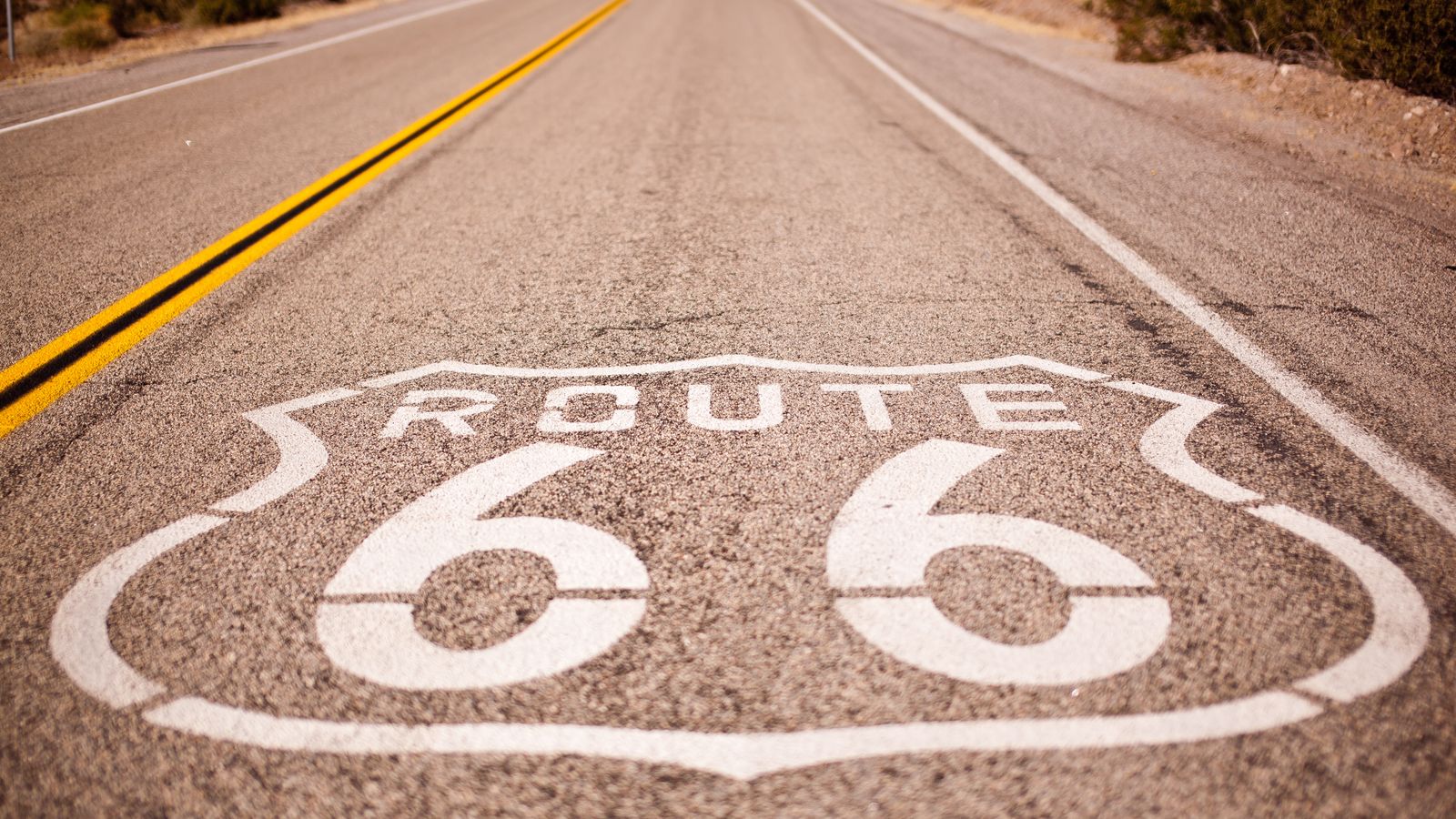
Route 66 is the most famous road in America and one of the most misunderstood to plan, because you can’t simply type it into a map and follow the line. It stopped being an official U.S. highway on June 27, 1985, when it was removed from the highway system. What people drive today isn’t a single signed route. It’s a stitched-together set of “Historic Route 66” alignments across eight states, and understanding that is the first real step in planning the trip.
There’s a reason to pay attention this year in particular: Route 66 turns 100 in 2026, having been established on November 11, 1926. The centennial is pulling more travelers onto the road than usual, which is both a reason to go and a reason to plan and book earlier than you otherwise would. This guide covers what the road actually is now, where it runs, and how long it really takes: the practical frame you need before applying the usual planning method.
What Route 66 actually is today
Since its decommissioning in 1985, Route 66 has had no single official designation. The old road was largely superseded by the interstate system (much of the journey now runs alongside I-55, I-44, I-40, and I-15), and the historic route survives as a patchwork. Some stretches are beautifully preserved and marked with brown “Historic Route 66” signs; others have been absorbed into the interstate, and a few have simply vanished back into the landscape.
In practice this means you follow alignments, not a highway. Some travelers stick to the interstate and dip onto the old road for the famous towns and roadside relics; purists hunt down the original pavement mile by mile. Neither is wrong, but the choice shapes your pace and your planning, and it’s why a single automatic route from Chicago to the coast won’t capture the trip. It’s the same trade-off that comes up on any long drive: when to take the slow road instead of the interstate.
The route: Chicago to Santa Monica, across eight states
Route 66 ran 2,448 miles from Chicago, Illinois, to Santa Monica, California, crossing eight states in this order: Illinois, Missouri, a short corner of Kansas, Oklahoma, Texas, New Mexico, Arizona, and California. (Realignments over the decades mean the drivable historic route today is closer to 2,278 miles.) That diagonal cut across the country is part of the appeal: it moves from Midwestern plains through the Southwest desert to the Pacific in one continuous line.
The symbolic finish is the “End of the Trail” sign on the Santa Monica Pier, though the road’s official terminus was originally an intersection inland at Lincoln and Olympic boulevards. The pier is where the trip feels complete, the point where a Midwestern city and the Pacific Ocean bookend more than two thousand miles of driving. If the ocean end of the trip is the part pulling at you, there’s a realistic Pacific Coast Highway itinerary to plan next.
How long it really takes
This is where honesty matters most. Covering roughly 2,400 miles of historic road (much of it slower two-lane alignment where the whole point is to stop) is not a one-week drive if you want to actually see it. At the relaxed pace we recommend elsewhere, around four to five hours of driving a day, Route 66 is realistically a two-week trip, and comfortably a three-week one.
You can do it faster by staying on the interstates and treating the old road as occasional detours, and plenty of people drive it in seven to ten days that way. But compressing 2,400 miles into a week means long days and highway miles: the opposite of what draws people to the Mother Road. Decide which trip you’re taking before you set the dates, using the same distance-divided-by-days check that keeps any route honest.
Direction, season, and building the route
The classic direction is east to west: Chicago toward the coast, following the historic flow of the road and chasing the sun into California. Season matters as much as direction: spring and autumn are ideal, avoiding both the punishing summer heat of the Southwestern desert stretches and the winter conditions that can affect the higher-elevation sections in New Mexico and Arizona.
Because no single map draws the historic route reliably, plan it in segments. Use a dedicated turn-by-turn Route 66 guide for the alignment, then build each day’s drive in Google Maps to get real distances and times between the towns you’re aiming for. In the centennial year especially, it’s worth deciding early whether to book your stops ahead, since the popular motels and diners along the route fill up faster than usual.
Where it fits among America’s great drives
Route 66 is the most storied American road trip, but it’s one of several worth building a trip around, and a very different experience from a coastal or mountain drive. If you’re weighing it against other options, or looking for a shorter first trip before committing three weeks, our roundup of the best road trips in the USA puts it in context alongside drives you can do in a long weekend. If that shorter trip is the one you’re after, and autumn is when you’d go, there’s a fall foliage loop through New Hampshire’s White Mountains.