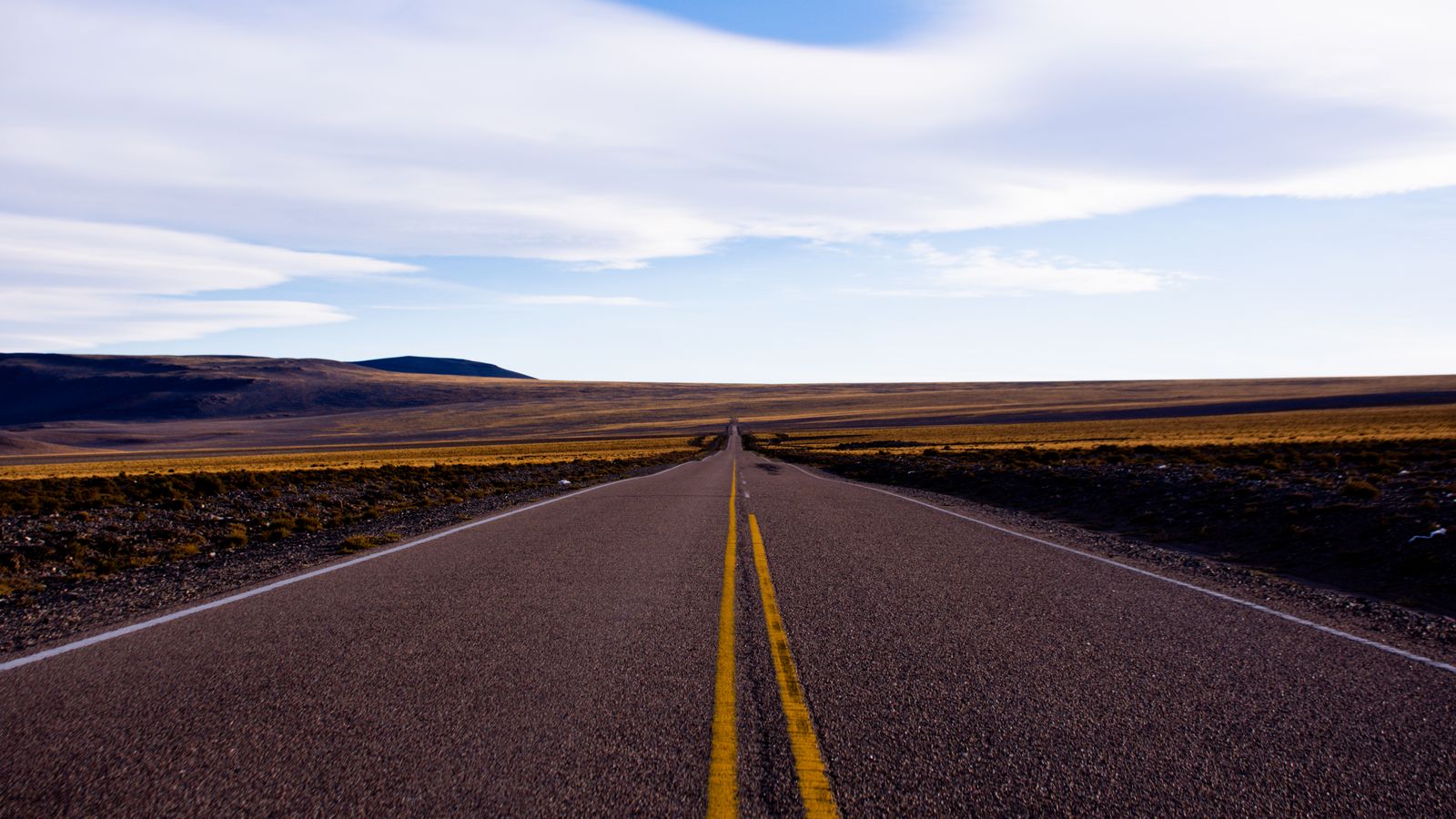
Every road trip is a running negotiation between two kinds of road: the interstate that gets you there, and the scenic route that is the there. Most people default to whatever the map picks, which usually means the fast road, and then wonder why the drive felt like a chore. Knowing when to take which is a genuine planning skill, and it’s the difference between covering ground and actually seeing it.
Neither road is better in the abstract; they’re built for different jobs. The trick is using each one on purpose. Here’s what each is good for, the trade-off between them, and how to build a route that uses both deliberately.
What interstates are for
The interstate system was built from the 1950s onward for one purpose: moving vehicles long distances quickly and predictably. Its roads are wide, fast, and engineered to bypass the towns and terrain that would slow you down. That makes them faultless at exactly one thing: closing the gap between the parts of your trip you actually care about. When the landscape between two regions is unremarkable and you just need to be somewhere, the interstate is the right tool, and there’s no virtue in refusing it.
What scenic routes are for
Scenic routes are the opposite proposition: slower, usually two-lane, and often the entire reason for the trip. A road like the Blue Ridge Parkway, 469 miles with a 45-mph limit and no commercial trucks allowed, isn’t trying to get you anywhere efficiently. It’s designed so the drive itself is the destination. This is the category that makes the best American road trips worth planning around: roads where slowing down isn’t a cost, it’s the whole point.
The real trade-off: time versus experience
The honest tension between the two is time. Scenic routes almost always take longer than their distance suggests (slower speed limits, more curves, and the stops they practically demand), so a route that looks short on paper can eat a whole day. That’s fine when the drive is the experience and a problem when it isn’t. The mistake is failing to account for it: budgeting a scenic road’s mileage at highway speeds is how people end up arriving somewhere in the dark, having enjoyed none of it.
The hybrid route is usually right
For most trips, the answer isn’t one or the other: it’s both, chosen deliberately. Use interstates to cover the dull ground between regions, and switch to scenic roads where the landscape is the attraction. This is the approach we recommend when mapping any route: a mix that spends your time where it’s worth spending. The goal is to be fast where speed costs you nothing and slow where slowness is the reward, rather than defaulting to one mode for the entire trip.
How to actually build it
Turning this into a real route is straightforward in a mapping tool. In Google Maps, you can toggle “avoid highways” to force the smaller roads, or drag the route line onto a scenic road you want to include, and it recalculates around your choice. The key habit is to check the kind of road between stops, not just the distance, so your drive-time estimates stay honest. A scenic detour is worth taking on purpose, not discovering by accident when the clock runs out.
A gut-check for each leg
A single question sorts most of these decisions leg by leg: is this stretch part of the trip, or just the way to it? If the landscape between two stops is a reason you’re going (a coastline, a mountain range, a river valley, a desert you actually want to see), take the scenic road and give it the time it needs. If it’s flat, featureless, or simply the distance between two places you care about, take the interstate and bank the hours for where they’ll count. You don’t have to settle the whole trip in advance; you decide it one segment at a time, and the answer is usually obvious the moment you ask the question honestly.
The trap is answering it by default instead of on purpose: letting the map’s fastest route make every choice, or, just as bad, insisting on back roads for a dull three-hour gap because scenic sounds virtuous. Neither autopilot serves the trip. A good route is a series of deliberate small choices about which kind of road each leg deserves, and that judgment is one of the quiet skills that separates a drive that flows from one that drags.
When scenic wins outright
Some drives settle the question entirely, because the road is the trip. The Pacific Coast Highway is the clearest example: nobody takes Highway 1 down the California coast to save time. You take it because the interstate parallel, Highway 101, misses everything worth seeing. When a road is that good, the scenic route isn’t a detour from the trip. It is the trip.