Some road trip gear belongs in your suitcase. The rest belongs in the car, and never leaves it. This is about that second kind: the safety, recovery, and comfort items that ride with the vehicle whether you’re going away for a weekend or a month. You pack them once, leave them in the trunk, and forget about them until the day one of them saves the trip.
Almost everything here falls into the category of things you hope never to use. That’s exactly why it gets skipped: it feels like packing for bad luck. But the cost of carrying a first-aid kit is nothing next to the cost of needing one you don’t have, two hours from the nearest town. This list pairs with our road trip packing checklist; think of that one as the suitcase and this one as the car.
What actually goes wrong
It helps to know what the failures really are before deciding what to carry. In 2024, AAA took more than 27 million emergency roadside service calls in the United States. Roughly 13 million of those vehicles needed a tow and about 7 million had battery trouble. Those two categories together came to around 74 percent of every call, which put them ahead of flat tires and lockouts combined.
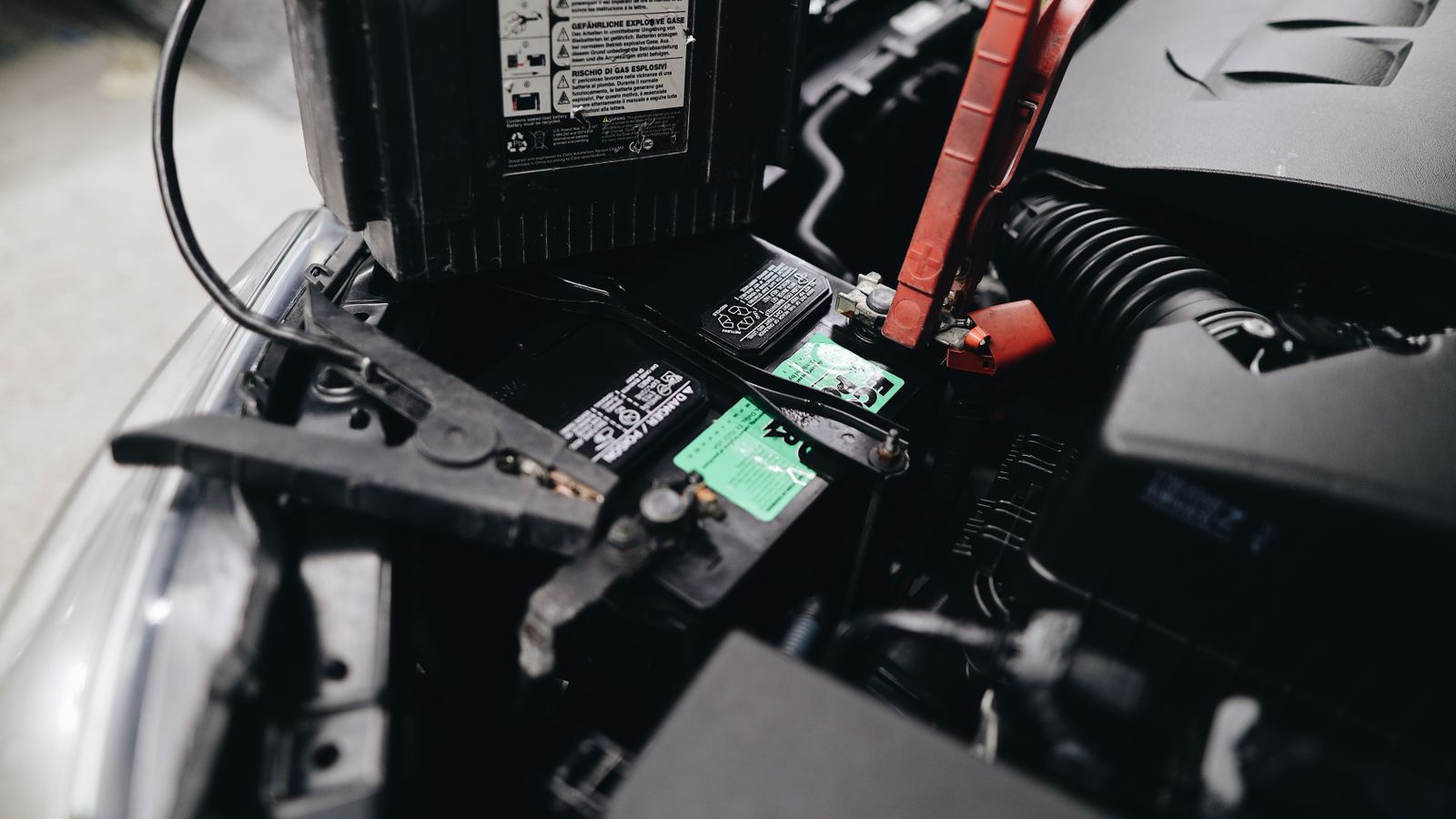
Hold that against the average packing list and the priorities look strange. Most road trip essentials lists open with snacks, a cooler and a phone mount. None of those appear anywhere in the failure data. A tow ends the driving day whatever is in your trunk, which leaves the battery as the largest single cause you can still do something about from the side of the road. That is the case for a jump pack, and it is a stronger case than any other item here can make.
First, check whether your car even has a spare
Before anything else, open the trunk and confirm what your car actually carries. A spare is no longer standard equipment. The last time AAA counted, in October 2017, 28 percent of that model year’s vehicles shipped without one, and in the twelve months before that AAA had rescued more than 450,000 members who got a flat and had no spare to put on. AAA has not published a fresher share since, so read that as a direction rather than as today’s number: the movement has been toward fewer spares, not more.
So find out which situation you’re in. If there’s a spare, locate it along with the jack and lug wrench, and check that the spare is actually inflated. A flat spare is a cruel surprise. If there’s an inflator kit instead, AAA’s finding is that those kits cannot provide even a temporary fix for sidewall damage or a blowout, only for a small puncture in the tread. The sealant also has a shelf life of four to eight years, so in an older car the kit may already be dead weight: look at the date on the canister. Renting? Do this same check at pickup, before you drive off the lot.
The tire pressure light is not an early warning
Every passenger vehicle under 10,000 pounds sold in the United States has carried a tire pressure monitoring system since the federal standard took full effect on September 1, 2007. What almost nobody knows is where that standard puts the trigger. Under FMVSS No. 138, the light has to come on once a tire falls to 25 percent below the pressure the manufacturer recommends, or to the floor set in the standard’s own table, whichever of the two is higher. For an ordinary standard-load passenger tire that floor is 20 psi.
Put a number on it. If the placard inside your driver’s door reads 35 psi, nothing is required to light up until the tire is down to about 26 psi. That is close to nine pounds under. The standard then allows the system up to 20 minutes to notice. Its own purpose statement is blunt about the job it was given: warning drivers of “significant under-inflation of tires and the resulting safety problems”. It was never built to tell you a tire is slightly low.
Carmakers are free to warn earlier and many do, but you cannot plan around it. A pressure gauge costs a few dollars, lives in the glovebox and answers the question in ten seconds. Check the pressures cold, before you drive rather than after, and check the spare while the gauge is in your hand. It is the cheapest item on this page and the one most likely to change how a day goes.
The breakdown kit
The core recovery kit handles what the call data says actually happens. Jumper cables cover a dead battery, and a self-contained lithium jump pack covers it without needing a second car and a stranger willing to stop, which on an empty road is the difference between a five minute delay and a tow. Add a tire inflator and pressure gauge, a flashlight or headlamp with working batteries, a pair of work gloves, a basic tool kit, and a roll of duct tape, which fixes a surprising number of temporary problems.
Round it out with a reflective warning triangle or flares and a high-visibility vest, so a breakdown on a shoulder doesn’t become a second emergency. A tow strap is worth carrying if your route includes dirt roads or snow. None of this is expensive or bulky, and it lives in the trunk permanently: the whole point is that it’s already there when you need it.
First aid, water, and warmth
A basic first-aid kit covers the small injuries that are otherwise a trip’s worth of discomfort, and it belongs in the cabin, not buried under luggage. Add any personal medications, and keep more water in the car than you think you’ll drink. In a hot-weather breakdown, water stops being a convenience and becomes safety equipment. A blanket earns its space too, useful for cold-weather waits and comfortable stops alike.
Staying connected and findable
Modern navigation is only as reliable as your signal, so build in redundancy. A phone mount keeps directions in your eyeline instead of your hand; a car charger and cable (plus a power bank) keep the phone alive across long days. Download offline maps before you leave, the same habit we walk through in our guide to mapping a route in Google Maps, and keep a paper map or atlas as a last resort for the areas where cell coverage simply doesn’t exist.
Comfort and keeping the car livable
A few unglamorous items keep the interior from turning against you over a long trip. A small trash bag or bin stops wrappers and bottles from taking over; wet wipes and paper towels handle spills; a windshield sunshade keeps the cabin bearable at rest stops in summer; and reusable water bottles cut both cost and waste. These are the things nobody plans for and everybody wishes they’d brought by day two.
The keep-in-the-car checklist
The full list, in one place. Pack it once and leave it in the vehicle:
- Tire & recovery: spare (checked and inflated) or inflator kit, jack, lug wrench, tire inflator & pressure gauge, tow strap
- Breakdown: jumper cables or jump pack, flashlight/headlamp, gloves, basic tools, duct tape, warning triangle or flares, hi-vis vest
- Safety: first-aid kit, personal medications, extra water, a blanket
- Connectivity: phone mount, car charger & cable, power bank, offline maps, paper map as backup
- Livability: trash bag, wet wipes, paper towels, sunshade, reusable bottles
Confirm your roadside assistance before you go
The last essential isn’t an object: it’s knowing who to call. Confirm your roadside assistance coverage before departure, whether it comes through your insurance, your car’s manufacturer, or a membership like AAA, and save the number somewhere you can find it offline. The moment beside a stalled car is not when you want to be reading the fine print.
Preparing the car this way is one of the steps first-timers most often rush, and skipping it shows up in our list of common road trip mistakes. Get it right once and it stops being something you think about: the kit is in the trunk, the coverage is confirmed, and a flat tire stays a delay instead of a disaster. For the rest of what goes in the bags, see the full packing checklist.