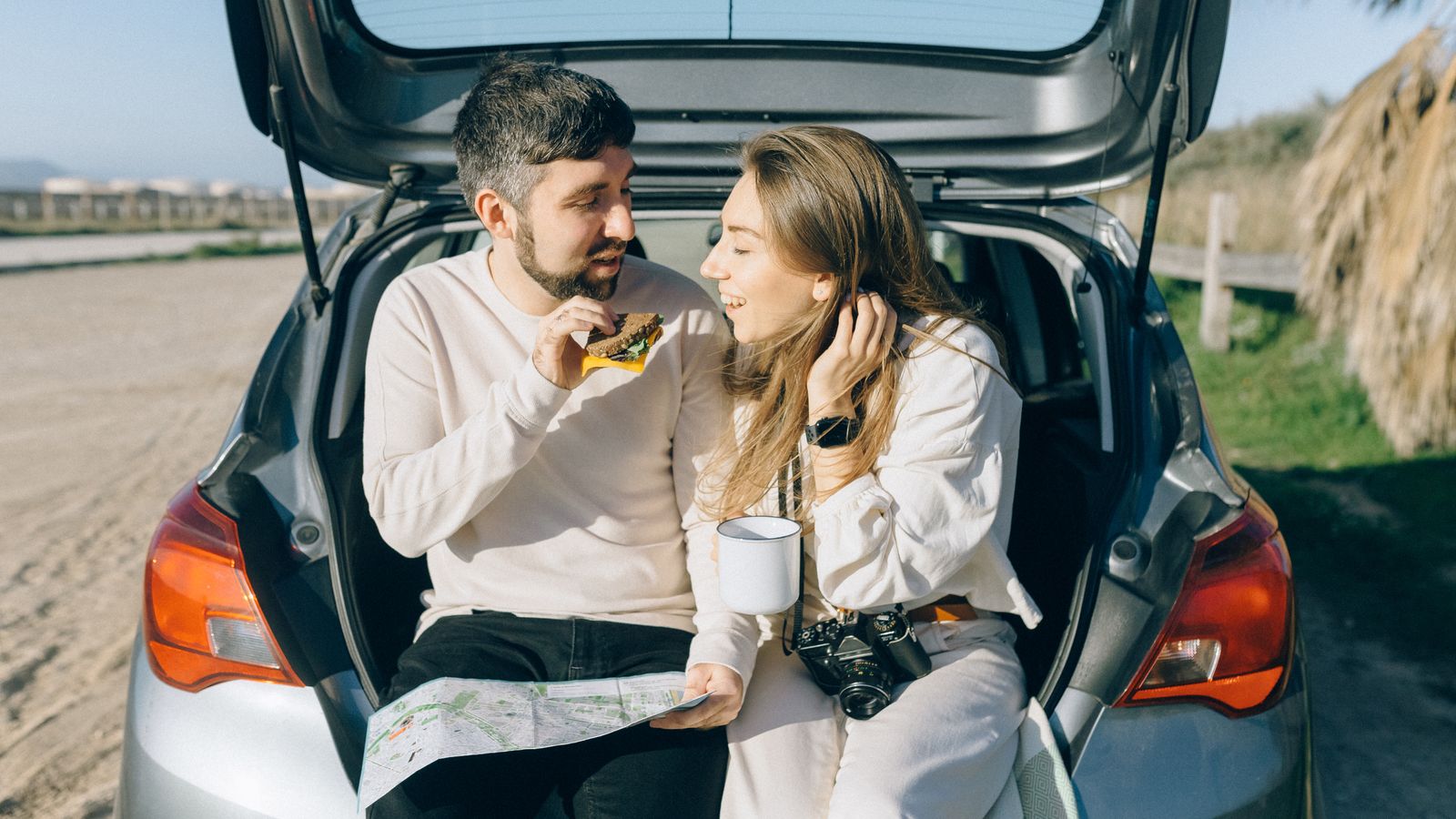
Snacks are quietly one of the most important things in the car. The right ones keep energy steady, moods level, and pointless stops to a minimum; the wrong ones (all sugar, nothing filling, or a cooler that stopped being cold three hours ago) turn a good afternoon south in a way that’s hard to trace back to a bag of candy. Getting the food right is a small effort that pays off across every hour of the drive.
This covers what to actually pack, how to keep it fresh and safe, and the balance that avoids the mid-drive slump. It pairs with the food section of our road trip packing checklist; think of this as the deeper version of the cooler-and-snacks line on that list.
Aim for steady energy, not sugar highs
The most common snacking mistake is loading up on pure sugar, which delivers a short spike followed by a crash that leaves everyone irritable and hungrier than before. The fix is to lean on snacks that combine protein, fiber, or complex carbohydrates: nuts and trail mix, jerky, cheese, hummus, fresh and dried fruit, vegetable sticks, whole-grain crackers, and nut butter. These release energy slowly and keep hunger at bay for real stretches, rather than setting up the next crash. A little sweet is fine: the goal isn’t a diet, it’s avoiding a car full of people running on sugar fumes.
Pack a mix of textures and types
Variety matters more than quantity. A single giant bag of one snack gets boring fast, while a mix (something crunchy, something chewy, something fresh, a little salty, a little sweet) keeps interest up over a long day and lets people eat to whatever they’re actually craving. Portioning snacks into individual grab-bags before you leave saves passing a communal bag around, cuts spills, and makes it easy to hand something back without taking your eyes off the road.
Keep the cold stuff cold: the safety part
Perishable snacks come with real food-safety rules worth knowing. The USDA’s guidance is that perishable food shouldn’t sit out of refrigeration for more than two hours, and no more than one hour when the air temperature is above 90°F (32°C), which a parked car easily exceeds in summer. Cold foods should be kept at or below 40°F (4°C), because bacteria multiply fastest in the “danger zone” between 40 and 140°F. In practice that means a cooler packed with plenty of ice or frozen gel packs, kept out of direct sun, and applying that two-hour clock once food comes out of it. When in doubt, throw it out. A spoiled lunch on the road is worse than a wasted one.
Hydration counts too
Water is the snack people forget. Staying hydrated does as much for alertness and mood on a long drive as any food, so carry plenty and keep a reusable bottle within reach for everyone in the car. Go easy on the sugary and heavily caffeinated drinks, which can dehydrate and add to the same spike-and-crash cycle as sugary food. Cold water from the cooler, refilled at stops, is the single most effective thing in the whole snack bag.
Manage the mess
A moving car is an unforgiving place to eat, so plan for the fallout. Keep napkins, wet wipes, and a small trash bag within reach, and lean toward snacks that don’t melt, crumble catastrophically, or stain. Chocolate in a hot car and bright-orange cheese dust are both regrets waiting to happen. Spill-proof containers and resealable bags keep a single bump in the road from redecorating the back seat.
A ready-to-shop snack list
To make the shop easy, here’s a balanced starting list you can adapt to your car and the season, built for steady energy rather than a sugar rush:
- Protein & staying power: nuts, trail mix, jerky, cheese sticks, hummus, nut butter
- Fresh & light: grapes, apples, carrot and celery sticks, cherry tomatoes, clementines
- Crunchy & savory: whole-grain crackers, pretzels, popcorn, veggie chips
- A little sweet: dried fruit, dark chocolate (kept in the cooler when it’s hot), granola bars
- Drinks: plenty of water, a reusable bottle each, a couple of treats kept cold
Buy a little more than you think you’ll eat: snacks stretch across more hours than people expect, and running out two hours from the next store is its own small crisis.
Keep a front-seat snack bag
Finally, organize for reach. Keep a day’s worth of grab-snacks and drinks in a small bag up front, restocked from the cooler at each stop, so nobody’s digging through the trunk at speed (the same within-reach principle that runs through our packing approach). On a family drive, a well-stocked snack bag is also one of the quietest tools for keeping the peace, working hand in hand with the games and audio that carry the long middle of the trip. Good snacks won’t make a drive, but bad ones can quietly unmake it.