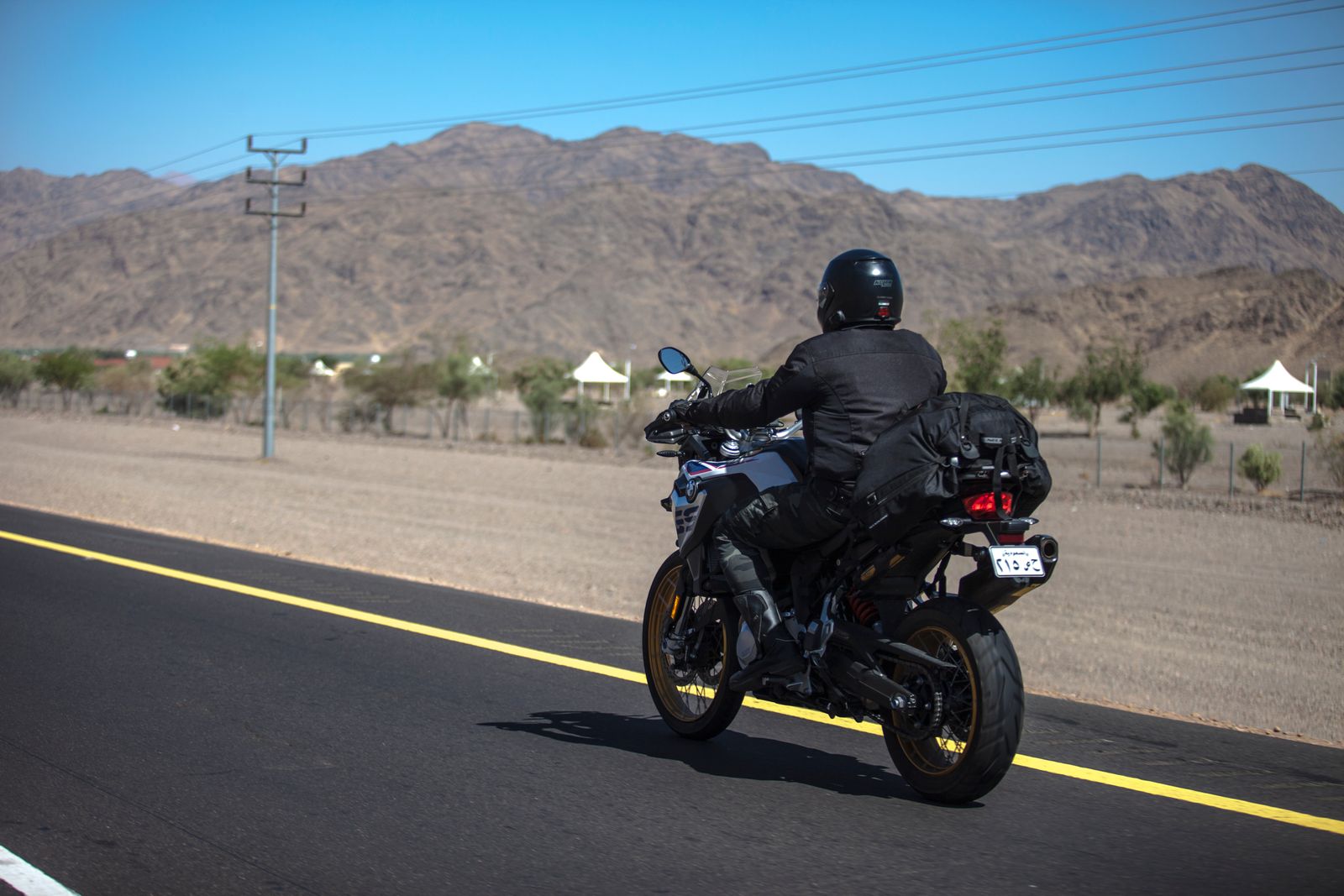
The broad logic of planning a motorcycle trip is the same as planning any road trip: pick a destination and a rough window, set an honest length, map a route, budget for it. If you haven’t done that part yet, our main road trip planning guide covers it step by step and applies just as well on two wheels. What’s different on a motorcycle is everything downstream of that: the details that a car-focused checklist simply doesn’t cover, and that can turn into real problems if skipped.
Start with the bike, not the route
Your motorcycle sets hard limits the route has to respect: how far it can go on a tank, how much luggage it can actually carry, and how comfortable it is after four hours in the saddle. A budget adventure-tourer with factory saddlebags and a full-dress luxury tourer with a 5-gallon-plus tank are not interchangeable for route planning: one needs more frequent fuel stops, the other can carry more gear but costs more to buy in the first place. If you haven’t chosen a bike yet, our comparison of touring motorcycles breaks down real options by budget and riding style before you plan a single mile.
Set a daily mileage you can actually sustain
Riding fatigue arrives differently than driving fatigue: it shows up in stiff shoulders and slow reactions well before it feels like exhaustion. Riders new to touring generally do better starting around 150 to 250 miles a day and building up from there, rather than planning a first trip around 400-mile stretches. A short break every couple of hours does more for the rest of the ride than pushing through, and mixing in a low-mileage day or a full rest day keeps a multi-day trip from wearing you down before it ends.
Plan around fuel and weather, not just scenery
A car with a 12-gallon tank can shrug off 80 miles between gas stations; a motorcycle with a 4-to-6-gallon tank can’t always. Before committing to a remote stretch (desert highways, mountain passes, rural backroads), check the actual distance between fuel stops, not just the distance between the sights you want to see. Weather matters more too: you’re not climate-controlled, so a route that gains several thousand feet of elevation can mean a 20-degree temperature swing between the valley and the pass, which changes what you need to pack, not just what you’ll see. Both problems show up in one trip on the Red Rock Canyon timed entry loop outside Las Vegas: a leg with no fuel at all, and a reservation you have to clear 30 days ahead.
Run a T-CLOCS check before you leave
The Motorcycle Safety Foundation teaches a pre-ride inspection routine called T-CLOCS (Tires and wheels, Controls, Lights and electrics, Oil and fluids, Chassis, Stands), and it’s worth doing properly before a multi-day trip, not just glancing at the tires. Tread depth and pressure matter more when a bike is loaded with luggage and a passenger; chain or belt tension and lubrication matter more over hundreds of miles than around town. Catching a worn tire or a loose chain in your driveway is an inconvenience; catching it 200 miles from home is a trip-ending problem.
Pack the ATGATT way
Riders call it ATGATT (All The Gear, All The Time), and on a multi-day trip it means packing a layering system, not just one jacket. A moisture-wicking base layer, an insulating mid-layer, and a waterproof-breathable outer shell handle a much wider temperature range than a single heavy jacket, and a packable mid-layer stuffed in a tank bag means you can adjust at a fuel stop instead of suffering through it. If rain gear isn’t already built into your riding jacket and pants, pack a separate rain layer sized to go over your gear, not your street clothes. Order it a size up so it actually fits over armor.
Confirm you’re actually covered
This is the detail most first-time touring riders miss: standard AAA membership does not automatically cover motorcycles. It’s a separate add-on tier, and coverage (towing distance, fuel delivery, trailer coverage) varies by region and plan level. If you’re relying on AAA, your manufacturer’s roadside program, or another provider, confirm motorcycle coverage specifically before you leave, not when you’re stranded. It’s a five-minute phone call that matters a lot more 300 miles from home than it does in your driveway.
None of this replaces the route-mapping, budgeting, and lodging planning that any road trip needs. For that, the main planning guide still applies. What changes on a motorcycle is what you check before you go, and what you carry once you’re on the road.