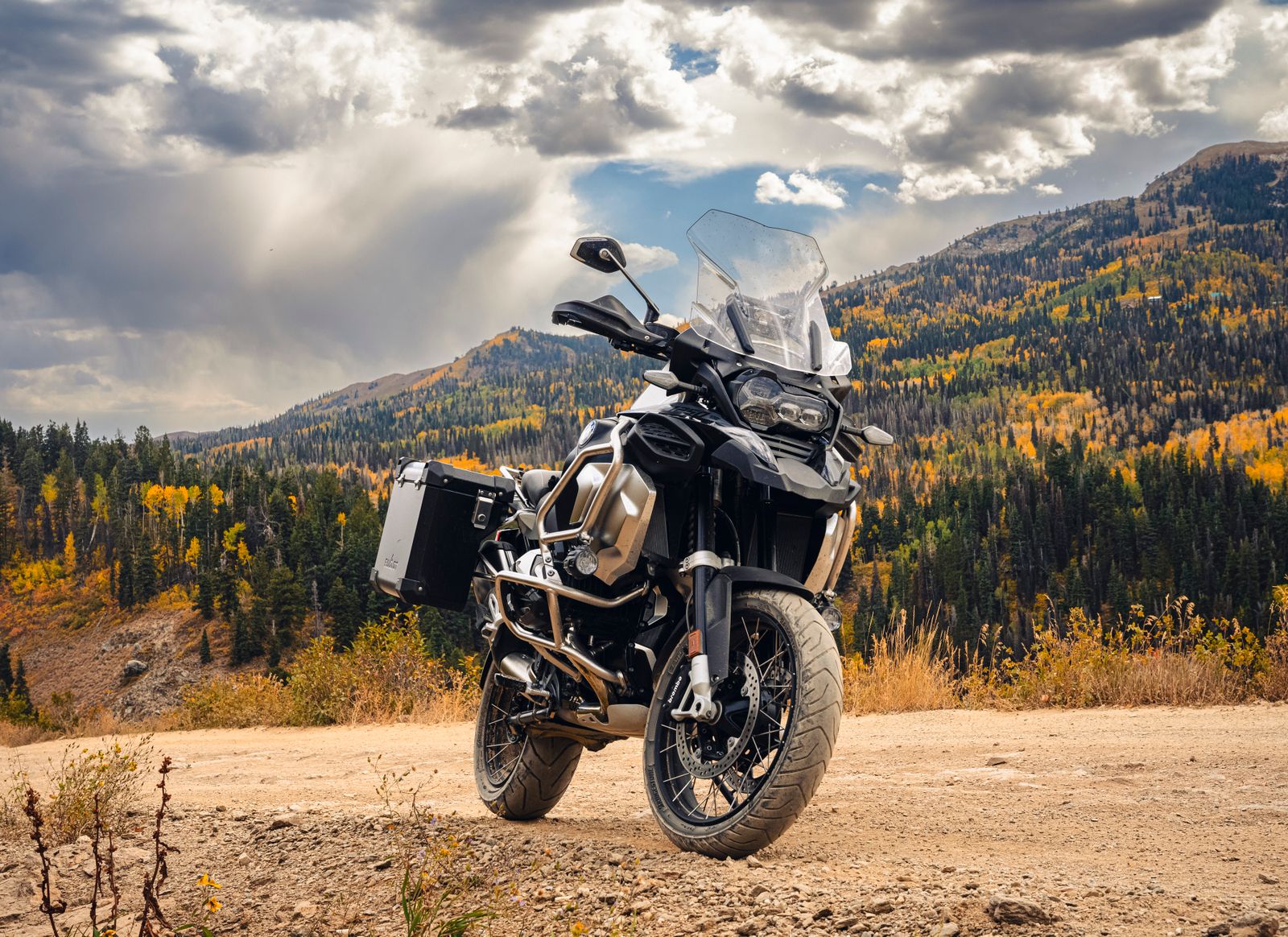
Not every motorcycle is built for the same trip. A sportbike wants a canyon road and a short ride home; a touring bike wants three states in a week. The difference shows up in the details that matter once you’re six hours into a riding day: wind protection, seat comfort, fuel range, and how much gear you can actually carry without strapping a duffel to the passenger seat. Six bikes below cover the real range of the segment, from a 937-pound American luxury tourer to a machine that costs less than a third as much.
Every price and spec here comes from the manufacturer’s own 2026 model page, checked on August 22, 2026. That matters more than it sounds: touring bike prices move every model year, and a lot of buying guides are still quoting numbers from two seasons ago.
The four kinds of touring motorcycle
A touring motorcycle is one built to be ridden all day with luggage and, usually, a passenger: wind protection from a fairing, a riding position that keeps your weight off your wrists, a tank big enough to make fuel stops a choice rather than a scramble, and somewhere to put your gear that is not a backpack. Every category below is a variation on those four things. Dealers use these words as if everyone already knows them. Most people shopping for a first touring bike don’t, and picking the wrong category costs more than picking the wrong brand.
- Full-dress tourers, also called full dressers or just dressers. Fairing, hard bags on both sides, a top case behind the passenger, floorboards, audio, and a backrest. Everything is bolted on at the factory. Expect 840 to 940 pounds ready to ride. The Gold Wing Tour, Indian Pursuit and Road Glide Limited live here.
- Baggers. Fairing and hard saddlebags, no top case. Lower, leaner, easier to filter through a parking lot, and you give up the passenger’s backrest and roughly a third of the luggage volume. The standard Road Glide is the reference point.
- Sport-tourers. A sportbike chassis with real wind protection and luggage, standard or optional. They carry less and shelter you less than a dresser, and they will hold a mountain pass at a pace no dresser can. The BMW R 1300 RT and Kawasaki Ninja 1100SX are two very different takes on it.
- Middleweight and adventure tourers. Upright riding position, longer suspension travel, half the weight of a dresser. Less comfortable at a sustained 80 mph, far less intimidating everywhere else. The Versys 650 LT is the budget end of this.
2026 touring motorcycle prices and key specs
| Model (2026) | MSRP | Weight | Seat height | Tank |
|---|---|---|---|---|
| Kawasaki Versys 650 LT ABS | $10,399 | 483 lb, plus about 20 lb of LT bags and guards | 33.3 in | 5.5 gal |
| Kawasaki Ninja 1100SX ABS | $13,999 | 518 lb | 32.3 in | 5.0 gal |
| BMW R 1300 RT | $22,495 | 620 lb | 30.7 to 33.8 in | 6.3 gal |
| Honda Gold Wing (base) | $25,500 | 806 lb | 29.3 in | 5.5 gal |
| Harley-Davidson Road Glide | $25,999 | 838 lb | 26.6 in laden | 6.0 gal |
| Honda Gold Wing Tour | $29,500 | 845 lb | 29.3 in | 5.5 gal |
| Indian Pursuit | from $32,499 | 937 lb (Limited with 112) | 26.5 in | 6.0 gal |
| H-D Road Glide Limited | $32,999 | 919 lb | 26.6 in laden | 6.0 gal |
| Honda Gold Wing Tour Airbag DCT | $33,800 | 856 lb | 29.3 in | 5.5 gal |
Two things jump out of that table. The spread between the cheapest and the most expensive bike here is more than $23,000, which is real-car money. And the heaviest bikes have the lowest seats, while the cheapest bike has the highest one. That second point catches more first-time buyers than the first.
Honda Gold Wing: the full-dress benchmark
The Gold Wing is the bike most non-riders picture when they hear “touring motorcycle,” and for good reason: it’s built as a rolling cabin, not just an engine with a fairing. The 2026 model runs a 1,833cc liquid-cooled flat-six with shaft drive, a 5.5-gallon tank and a seat height of 29.3 inches, low enough that shorter riders can flat-foot it despite a curb weight of 806 pounds on the base bike. It’s available with a conventional six-speed or a seven-speed dual-clutch automatic, which matters more on a long trip than it sounds: no clutch hand after eight hours in traffic.
Worth knowing before you compare spec sheets: Honda does not publish a horsepower figure for the Gold Wing in the United States. Any guide quoting one to the tenth of a horsepower is repeating a magazine dyno run or a European homologation number without saying so. The engine’s reputation rests on smoothness rather than a headline figure anyway.
The range is wider than most people expect. The base Gold Wing is $25,500. The Tour, which adds the top case and the touring seat, is $29,500. The Tour Airbag DCT at the top of the range is $33,800, and it’s the only production motorcycle sold in the US with an airbag. Add $775 destination to all of them. This is the bike for two-up, multi-week trips where comfort outranks everything else.
Indian Pursuit: the American full-dress answer
If you want a dresser without a Japanese flat-six, the Pursuit is the most complete American package. The PowerPlus 112 version makes 126 hp and 134 lb-ft at 3,600 rpm from a 1,834cc V-twin, which is a genuinely different way of covering distance from the Gold Wing: the torque is there the moment you roll on, so you shift less and pass without planning it.
It is also the biggest touring motorcycle in this comparison and one of the biggest sold anywhere: 937 pounds in running order, 6 gallons of fuel, and more than 36 gallons of lockable storage. The seat sits at just 26.5 inches, the lowest here by a clear margin, which does a lot to make that weight manageable at a standstill. Pricing starts at $32,499. This is a bike for riders who already know they want the long-haul American tourer and want the technology with it, including blind spot and rear collision warning as standard on the 112.
Harley-Davidson Road Glide: the American bagger
The Road Glide represents a different touring philosophy: less cabin, more presence. It runs the Milwaukee-Eight 117 V-twin at 105 hp and a fatter 130 lb-ft at 3,250 rpm, which is what actually matters when you’re rolling on at 70 mph with the bags loaded. A 6-gallon tank and Harley’s own 44 mpg estimate put real-world range around 260 miles. Weight is 838 pounds in running order, and Harley publishes a laden seat height of 26.6 inches, which is what the seat measures with a rider on it.
The base Road Glide is $25,999, which makes it a direct rival to the base Gold Wing rather than the undercut people assume. Step up to the Road Glide Limited at $32,999 and you get the top case, the redesigned Grand Tour-Pak and heated seats, at 919 pounds and a claimed 45 mpg. Pick the standard bike for the bagger look and the sound; pick the Limited if you’re two-up for a week at a time.
BMW R 1300 RT: the sport-tourer that carries a passenger
If the Gold Wing and the Pursuit are built to cruise, the R 1300 RT is built to cruise fast. BMW’s 1,300cc boxer twin makes 145 hp at 7,750 rpm and 110 lb-ft at 6,500, and it comes with two 27-liter side cases as standard equipment rather than as a line on the options sheet. The 6.3-gallon tank is the largest here, and at 620 pounds fully fueled the RT undercuts the lightest of the dressers by 186 pounds.
Seat height runs from 30.7 to 33.8 inches depending on which seat is fitted, the widest adjustment range in this group, so it fits a broader spread of riders than the raw number suggests. MSRP is $22,495 plus destination, which makes it the cheapest way into a full-size, two-up-capable tourer on this list. This is the pick for a rider who wants twisty mountain roads and long interstate stretches on the same trip without switching bikes.
Kawasaki Ninja 1100SX: sport-touring without the luxury bill
The Ninja 1100SX is what sport-touring looked like before the category went upmarket. A 1,099cc inline four making 134 hp at 9,000 rpm and 83.2 lb-ft at 7,600, 518 pounds ready to ride, and a $13,999 MSRP that is $8,500 below the BMW. Hard luggage is an accessory rather than standard equipment, so budget for it.
The honest limitation is the 5.0-gallon tank, the smallest here, on an engine that will drink if you use the top of the rev range. Plan fuel stops closer together than you would on the BMW. In exchange you get a bike that weighs 400 pounds less than a Pursuit and still crosses a state comfortably, which is a trade a lot of riders would take twice.
Kawasaki Versys 650 LT: the cheapest real way in
Not every road trip needs a $25,000 motorcycle. The Versys 650 LT comes standard with hard saddlebags, hand guards, an adjustable windscreen and a 649cc parallel twin making 66 hp at 8,500 rpm and 45 lb-ft at 7,000. That is plenty for two-lane highways and mountain passes, if not for effortless interstate passing with a passenger. MSRP is $10,399, less than half the cost of the cheapest bike above it here.
Two numbers deserve more attention than they usually get. Kawasaki lists 482.9 pounds curb, then notes that the LT’s saddlebags and hand guards add roughly another 20, so call it just over 500 pounds as it sits in the showroom. And the seat is 33.3 inches, the tallest bike in this entire comparison. The lightest, cheapest machine here is also the one a 5-foot-6 rider will struggle to flat-foot. Sit on it before you buy it.
Seat height decides more than the spec sheet suggests
Look back at the table and the pattern is the opposite of what intuition says. The 937-pound Pursuit has a 26.5-inch seat. The 483-pound Versys has a 33.3-inch seat, nearly seven inches taller. Weight is what a bike feels like once it’s moving; seat height is what it feels like at every stop sign, every gas pump and every gravel pull-off, which on a touring day is where the nervous moments actually happen. A heavy bike you can flat-foot is easier to live with than a light one you can’t.
One more trap: manufacturers do not all measure the same way. Harley publishes a laden seat height, measured with a rider aboard and the suspension compressed. Honda, Kawasaki and Indian publish unladen figures. Comparing a Harley number to a Kawasaki number straight across the table understates the Harley by an inch or so. Nobody says this on a spec page, and it is the single most common reason a bike feels taller in the dealership than the brochure promised.
Riding two-up: the number almost nobody publishes
Ask which of these bikes carries a passenger and every brochure says yes. The useful question is how much weight one can legally carry once you add a second adult and a week of luggage, and only two of these five manufacturers give you enough to work it out.
BMW publishes it outright: the R 1300 RT has a permitted total weight of 1,124 pounds and a payload of 504 pounds with standard equipment. Indian publishes a GVWR of 1,385 pounds for the Pursuit Limited with 112 against a running-order weight of 937, which leaves 448 pounds. Honda does not print either figure on the Gold Wing page. Neither does Harley-Davidson on the Road Glide page, or Kawasaki on the Versys 650 LT page. On those three you are working blind.
Put real numbers against that. Two adults at 190 pounds each is 380. Add riding gear for both, two helmets and a week of luggage and you are 60 to 100 pounds beyond that. On the BMW there is room left. On the Pursuit you are at the line, and that is the bike most people would assume has the most capacity, because it is the biggest and heaviest one here.
That inversion is worth sitting with. The heaviest motorcycle in this comparison is not the one that carries the most. Weight already built into the bike is weight you cannot spend on people and luggage, and a full dresser spends a lot of its allowance on the fairing, the top case and the audio before you have loaded anything.
Two other things decide a week on the back. A backrest and a top case, which the Gold Wing Tour, the Pursuit and the Road Glide Limited have as standard and the base Road Glide does not. And a passenger seat someone can actually sit on for six hours, which is where the dressers earn the difference in price. The Ninja 1100SX and the Versys 650 will both carry a passenger. Neither is a bike I would ask someone to spend a week on the back of.
Matching the bike to the trip
Budget and body size answer half the question; the rest comes down to how many miles you actually plan to ride each day. New touring riders are generally better off starting around 150 to 250 miles a day and building up from there rather than planning a first trip around 400-mile stretches: fatigue on a motorcycle creeps in through stiff shoulders and slow reactions well before it feels like exhaustion, and a short break every couple of hours does more for the rest of the day than pushing through. A lighter, lower-seat bike suits a rider still building that endurance; the heavier dressers reward riders who already know what an eight-hour riding day feels like.
None of these bikes will fix a bad route. Once you’ve picked one, planning a motorcycle road trip means working through the same daily-distance, fuel-stop and weather questions as any road trip, just with a few details a car-focused checklist won’t cover. If you want somewhere to point it, the best scenic roads for a motorcycle trip and the Blue Ridge Parkway are the two routes most riders build a first long trip around.