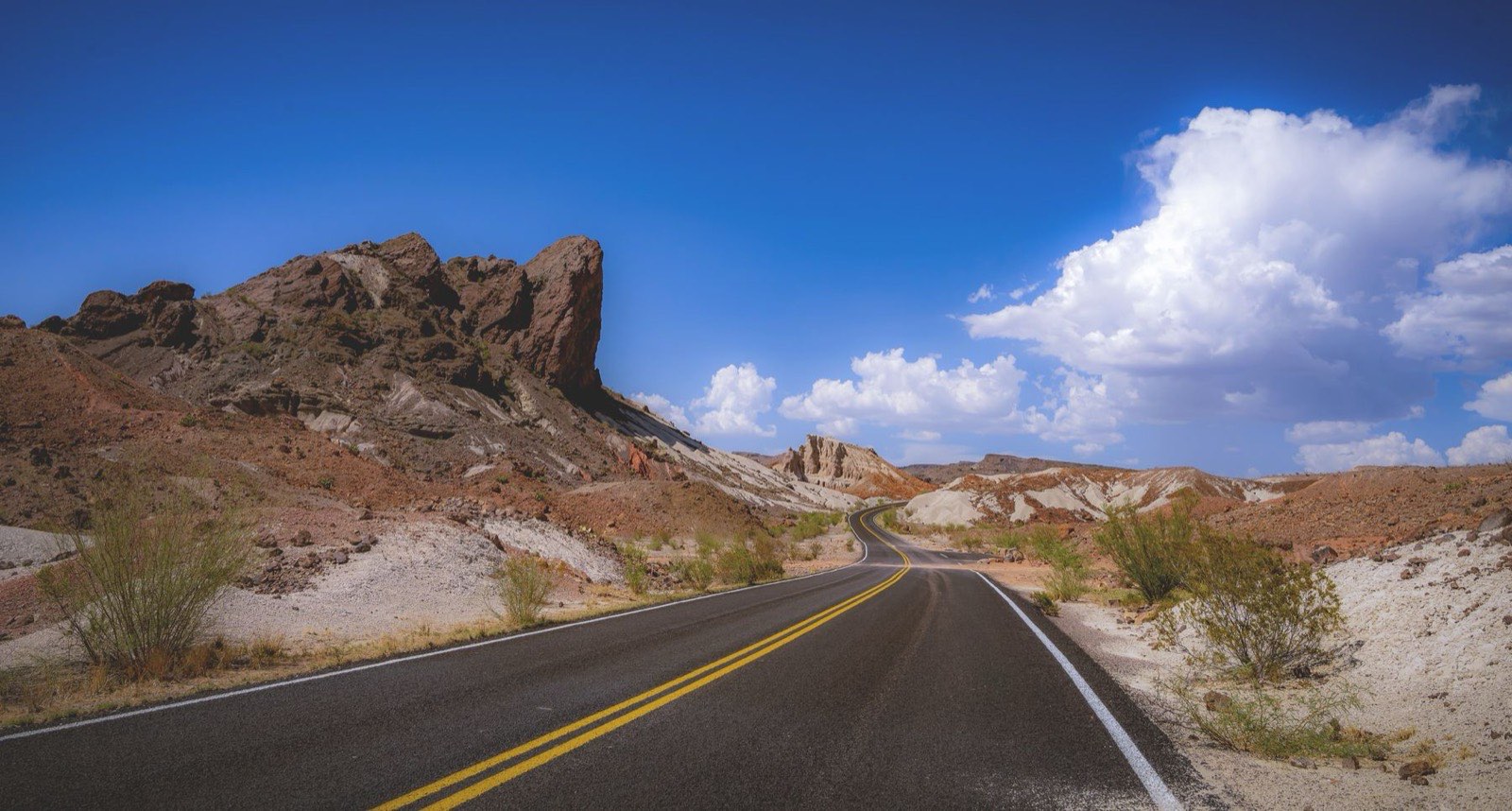
For most of the past two years, every Big Bend article carried the same warning: book now, because the Chisos Basin shuts down in 2026 for a two-year rebuild and you won’t get another chance until 2028. That advice is dead. The Park Service has pulled that project as designed, and it says the closures it would have forced will not take place. The Basin is not closing, and the winter 2026 to 2027 season is the first one in a while where you can plan a Big Bend trip without a countdown clock attached to it. Keep one eye on the calendar anyway: the park intends to re-bid the Chisos Basin water system rehabilitation as its own contract, on a schedule it says is still being finalized.
That’s the good news. The complication is that the reason the rebuild existed in the first place has not gone anywhere, and it will shape how you book. Here’s a four-day winter itinerary that accounts for both.
What actually changed
The cancelled project was not cosmetic. Funded through the Great American Outdoors Act Legacy Restoration Fund, it would have demolished the main Chisos Mountains Lodge building and rebuilt it inside the original footprint, with a new dining room, lobby, store and restrooms, while replacing the water lines, storage tanks, hydrants and treatment systems across the whole Basin: campground, hotel units, visitor center, public restrooms, employee housing and the historic cottages. For roughly two years, Basin Road, the lodge, the campground, the restaurant, the visitor center, the camper store and the Basin trails would all have been closed to visitors.
Start date slipped from May 2025 to fall 2025 to May 2026, and then the package fell apart. The Park Service says the work will not proceed as planned, blames a budget shortfall opened up by construction costs rising sharply since 2019, and now intends to re-bid the water system rehabilitation on its own while it keeps looking for a way to fund the lodge. One warning for anyone who checks: the park’s own construction timelines page has not caught up, and still shows a May 1, 2026 start, a summer 2028 completion and Basin facilities open only through April 30, 2026.
Meanwhile the water problem the project was meant to fix showed its teeth. On December 23, 2025, the pumps at Oak Spring failed completely. Oak Spring is the only water source for the entire Chisos Basin developed area. The park went to Stage 2 restrictions the same day, with the backup pump already out of the park for repair, and warned that if the storage tanks fell to the minimum needed for firefighting it might have to close the area outright. The lodge has been running reduced through spring and summer 2026: limited room availability, and a registration desk on short hours handling check-in only. The dining room and bar are closed for the foreseeable future, which leaves the Basin Store and the Chisos Basin Food Truck as the only food up there, and the concessioner warns its hours vary. The concessioner expects a return to full capacity by September 2026.
So if you’re reading a 2025 article telling you the Basin is about to vanish, ignore it. If you’re reading one that assumes the lodge has been humming along all year, ignore that too.
Book the room before you plan the days
Chisos Mountains Lodge is the only lodging inside Big Bend. Not the best, the only. It is 72 rooms in all, spread across Casa Grande rooms, Rio Grande motel units, Emory Peak Lodge rooms and five Roosevelt Stone Cottages. The lodge does not publish a count for each type. That’s 72 units for a park with 123 miles of paved road, 181 miles of unpaved road and 201 miles of trail.
The lodge takes bookings a long way out, and the stone cottages go first: its own FAQ says to book at least six months ahead for most rooms, and one to two years ahead for the Roosevelt cottages. Do the arithmetic on that: if you want Thanksgiving week or the stretch between Christmas and New Year, you are already late. What you’re realistically booking in August is January and February, which are better months anyway: the park is quieter and the hiking weather is the best it gets, with January averages near 59 degrees up in the Basin and 70 down at the river. Pack for the nights, though. Basin lows average 37 degrees in January, and the desert drops to 29 in December.
Call rather than only checking the website. The Park Service lists the lodge at 432-477-2291 and the reservations line at 855-765-1324, and the registration desk up in the Basin is on limited hours and handles check-in only, so aim for reservations. The concessioner anticipates a return to full capacity by September 2026, so rooms that show as unavailable online in August may open up for the winter.
If the lodge is full, base in Terlingua or Study Butte outside the west entrance. It adds a commute to each day, and it’s the normal way most people do this trip.
Camping has a split reservation window most people miss
Big Bend does not put all its campsites on the same clock. About two thirds of the sites at Rio Grande Village and Chisos Basin campgrounds are reservable up to six months ahead. The other third is reservable too, but only 14 days out. Every site at Cottonwood is on the 14-day window, and Cottonwood itself is closed for the summer and reopens November 1, so the earliest nights you can actually book there are in November.
This is genuinely useful if you’re flexible. Missing the six-month window is not the end of it: set an alarm for 14 days out and you’re competing for a real block of sites, not scraps. Reservations go through recreation.gov or 1-877-444-6777.
Day 1: Get in, fuel up, go east
However you approach, your first stop inside the park is Panther Junction, which is headquarters, visitor center and the place you sort out fuel. The Park Service lists the Panther Junction Service Station as open daily with the pumps running 24 hours, though that page has not been updated since 2022 and still names a concessioner the park has since replaced, so treat a middle-of-the-night fill-up as a bonus rather than a plan. There is one other station in the park, at Rio Grande Village, and the nearest backup pumps outside the boundary are at Study Butte, Lajitas and the Stillwell Store. Two stations inside the park, 300 miles of road. Fill up when you see a pump, not when the gauge tells you to. Fuel at that spacing changes what the week costs, which the road trip budget guide works through.
Then head southeast toward Rio Grande Village. The Hot Springs Historic District sits about 16 miles from Panther Junction. The soak is a hot spring rising at 105 degrees into the stone foundation of an old bathhouse, right at the river’s edge, and in January it is exactly as good as it sounds. One caveat: when the Rio Grande floods it runs over the spring and often submerges it, and the water can stay buried under rock, mud and debris after the river drops, so check at a visitor center before you drive down. The access road is short, narrow and unpaved, so leave the trailer behind.
Stay out after dark on this first night. Big Bend has the least light pollution of any National Park Service unit in the lower 48, and the park counts roughly 2,000 stars visible on a clear night against a few hundred in a mid-sized city. Winter is the right season for it: the air is dry and the nights are long.
Day 2: The Chisos Basin, which you can now actually do
The Basin sits at 5,401 feet, in a bowl ringed by the Chisos, the only mountain range completely contained within a national park. The road in is six miles of switchbacks climbing more than two thousand feet above the desert floor before dropping steeply into the bowl. It is not a road for a long trailer: the Park Service advises against trailers over 20 feet and RVs over 24 feet, on sharp curves and grades that reach 15 percent.
Do Lost Mine in the morning: 4.8 miles round trip, 1,100 feet of climb, about three hours. The parking area is small and fills early even in winter, so be there by eight.
Save the Window for late afternoon and time it so you’re at the pour-off for sunset, knowing what you trade for it: the Park Service advises starting this hike early, and the last quarter mile runs through a slickrock canyon where the footing gets difficult. From the Chisos Basin Trailhead it’s 5.5 miles round trip with 1,000 feet of change, about three hours. Starting from the Basin Campground Trailhead instead cuts it to 4.0 miles and 600 feet. Note the direction of that elevation: you walk down to the Window and climb 1,000 feet to get back. Plenty of people misjudge this one and finish in the dark. Carry a headlamp regardless, because in December you lose the light early. And sort dinner out before you come up: the lodge restaurant is closed and the food truck that replaced it stops serving mid-afternoon, so there is nothing hot in the Basin in the evening. Stock up at the camper stores at Panther Junction or Rio Grande Village, or eat in Terlingua on the way through.
Day 3: Ross Maxwell Scenic Drive and Santa Elena
This is the best driving day in the park. The Ross Maxwell Scenic Drive runs southwest from the main park road down to the Rio Grande. The Park Service puts it at thirty miles, so budget a good hour behind the wheel even without stopping, which you will.
At the end of it is the Santa Elena Canyon Trail: 1.6 miles round trip, 80 feet of elevation, about an hour. One closure to know about before you drive down, unrelated to the Basin: since August 12, 2026 construction work has shut the Santa Elena boat launch, the eastern edge of its parking lot and the riverbank alongside it, until further notice. The payoff-to-effort ratio here is the best in Texas. You walk into a limestone slot with sheer walls rising straight off the river, Mexico on one side and the United States on the other, and the whole thing takes less time than lunch.
One thing to check the morning you go: the trail crosses the bed of Terlingua Creek near the mouth of the canyon, and depending on recent rain that crossing can be dry sand, thick mud or flowing water. The Park Service says plainly that if the water is deep and swift, you do not cross. Ask at a visitor center first, remembering that Castolon, the only one on this drive, runs November through April, 10 a.m. to 4 p.m. with a lunch closure. An early start means asking at Panther Junction instead, open daily 8:30 to 5 year round.
Day 4: Cross into Boquillas, but check the day of the week first
The Boquillas Crossing is the part of Big Bend nobody plans for and everybody remembers. You walk to the river, take a rowboat across for a fee, and spend a few hours in Boquillas del Carmen, a Mexican village of a couple hundred people that is reachable from the Mexican side only by a long dirt road.
The constraint: the port of entry is open Friday through Monday, 9 a.m. to 4 p.m. Those hours have stood under an open-ended notice since November 1, 2025, and the park has said they will not switch to a winter schedule for now, so check them again the week you travel. A passport book or a passport card is required to cross and to come back, and an Enhanced Driver’s License will not do it. No vehicles cross here. If your trip runs Monday to Thursday, Monday is your only shot and the crossing closes at 4 p.m., so build the itinerary around that one day rather than hoping.
What it costs
- Entrance: $30 per vehicle, $25 per motorcycle, $15 per individual, each valid for seven days. The park is cashless: credit or debit card only, at every entrance station and visitor center.
- Big Bend annual pass: $55. Worth it only if you’re coming back inside a year.
- America the Beautiful annual pass: $80 for US citizens and residents, $250 for non-residents, covering entrance and day-use fees at more than 2,000 federal recreation sites.
- Camping: $16 per night per site, $8 with a Senior or Access pass, and $10 a night for a backcountry permit. Reservations are required at all three developed campgrounds, through recreation.gov or 1-877-444-6777.
- Boquillas crossing: $5 round trip for the rowboat, plus a required $7 entrance fee to the Maderas del Carmen Protected Area, paid to Mexican immigration on arrival. That is $12 a head before you buy anything. Cash only, and bring small bills for the burro ride and lunch.
- One free day: November 11, 2026, Veterans Day, is a fee-free entrance day for US citizens and residents. Cheaper, and busier.
The thing that could still go wrong
Cancelling the rebuild did not fix the water system. The Basin still runs on one spring, and that spring’s pumps failed outright in December 2025. The park dropped the water alert at the end of January 2026 and has posted none since, so the taps are back on. It never announced a repair either, and the rehabilitation meant to fix the system for good is now out for re-bid with no schedule attached. A park that averages about 9 inches of rain a year down at Rio Grande Village and 17 up in the Chisos Basin does not have a spare source to fall back on.
My honest read: book the Basin, and have a Terlingua fallback you can switch to without losing money. A refundable reservation outside the park is cheap insurance on a trip where the nearest real town is a long way off in every direction. That distance changes the calculation if you are going alone, which is what solo road trip planning is about. Carry more water in the vehicle than you think you need, which is good practice in Big Bend in any year. The rest of what belongs in the trunk is in the car emergency kit.
Check these three pages the week you leave
- Park alerts and conditions: nps.gov/bibe/planyourvisit/conditions.htm. This is the page that carries the real Boquillas hours, the restaurant and food truck status, and the road closures. In August 2026 it lists Old Ore Road and Black Gap Road shut until further notice after flash flood damage
- Boquillas port days and hours, which the park changes on its own timetable and posts by open-ended notice: nps.gov/bibe/planyourvisit/visiting-boquillas.htm
- Lodge status and room availability, by phone at 432-477-2291 or on the reservations line at 855-765-1324 rather than by web form, since the Basin registration desk is on limited hours and handles check-in only
Big Bend covers 801,163 acres, 1,252 square miles, which makes it the 15th largest unit in the park system. Its record year was 2021, at 581,000 recreational visits. Spread that across a park that size in January and you can drive Ross Maxwell and pass almost nobody. The two-year closure everyone braced for is off. Go now: visitation reached 561,459 in 2024, within a few percent of the 2021 record, and January is still the quietest stretch of the year.